

Bathroom Remodel ROI: What Homeowners Should Know Before Spending
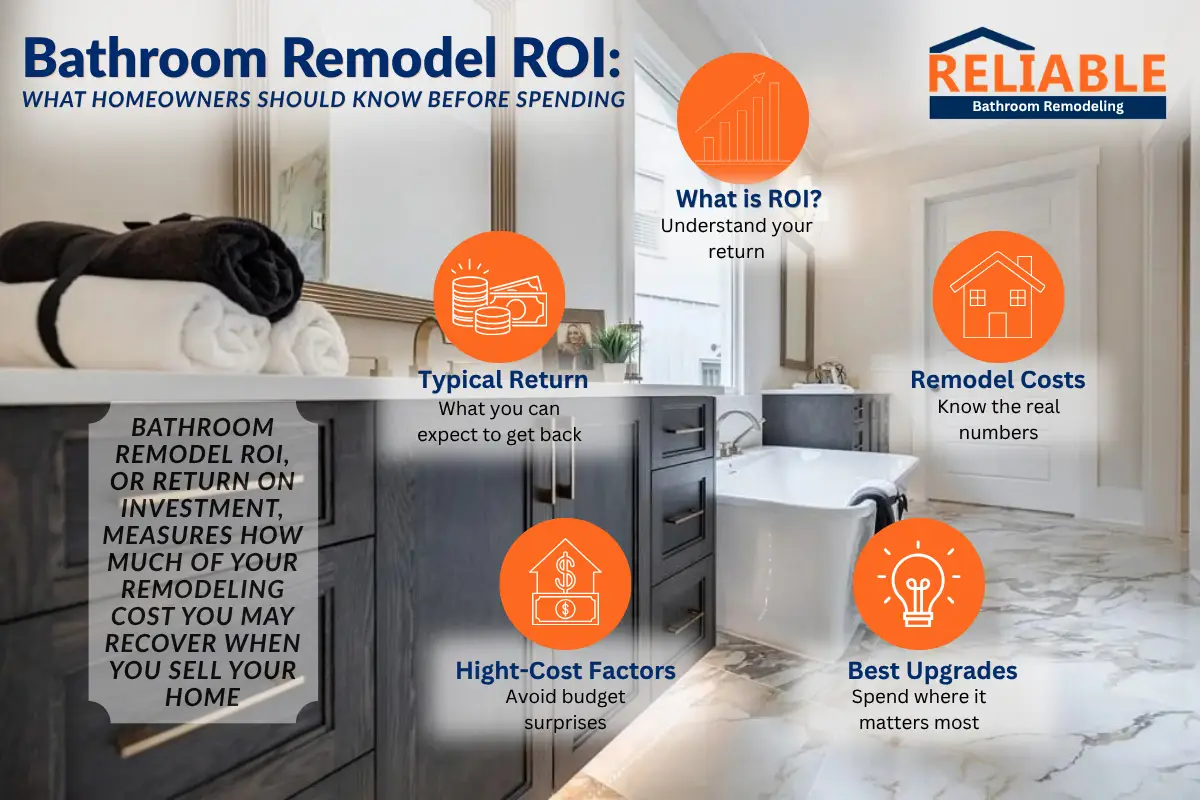
Picture two neighbors who finish bathroom remodels the same spring. One spends about $26,000 on a solid, well-planned update and hears from an agent that it was a smart move. The other spends more than $80,000 on a bigger footprint, heated floors and a showpiece tub, and hears something quieter: “Lovely, but buyers will not pay for all of it.” Same street, same house age, very different math.
Return on investment sounds like a finance term, but when it comes to a bathroom remodel ROI, it really comes down to one question: How much of what you spend comes back, and in what form? Some returns come through increased resale value, others through years of everyday comfort, and still others through avoiding costly repairs and future problems. This guide explores all three, drawing on two of the industry’s most frequently cited sources. Figures were checked in November 2026.
Quick answer
The 2025 Cost vs. Value Report found that a midrange bathroom remodel recouped about 80% of its cost at resale nationally, while an upscale one recouped about 42%. NAR’s 2025 Remodeling Impact Report puts a typical bathroom renovation near 50%. So a fair planning range is roughly 50 to 80 percent for a sensible remodel, and much lower for luxury scopes. A bathroom remodel rarely turns a profit at sale by itself, but a well-scoped one can cost far less than it first appears, and it pays you back in comfort and protection too.
What ROI really means for a bathroom
In remodeling, “ROI” is used loosely. The industry mostly reports cost recouped: the estimated resale value a project adds, divided by what the project cost. If you spend $20,000 and the estimate says it adds $15,000, the project recouped 75%. On paper you are $5,000 behind, but you also got a bathroom to use. That is why a percentage below 100 does not mean the project was a mistake. It means the money did not all come back at the closing table.
Two cautions before we look at numbers. First, these are estimates for standardized projects, not your bathroom, your street or your buyer. Second, this is general information, not financial or tax advice. A local real estate agent, an appraiser or a tax professional can tell you what applies to your home.
What the numbers say
The 2025 Cost vs. Value Report, produced by the Journal of Light Construction, compares average job costs with the resale value estimated for 28 remodeling projects across 119 U.S. markets. Here are the bathroom lines from the national averages.
| Project (as defined by Cost vs. Value) | Average job cost | Estimated resale value | Cost recouped |
|---|---|---|---|
| Bath remodel, midrange | $26,138 | $20,915 | 80% |
| Bath remodel, universal design | $42,183 | $25,812 | 61% |
| Bathroom addition, midrange | $60,645 | $32,347 | 53% |
| Bath remodel, upscale | $81,612 | $34,000 | 42% |
| Bathroom addition, upscale | $111,255 | $40,526 | 36% |
The same report in its 2024 edition showed the midrange remodel at $25,251 and 73.7%. So the percentage rose in a year while the price barely moved. Home values, labor costs and buyer demand all shift these figures, so treat any single year as a snapshot, not a law.
Now compare a second source. NAR’s 2025 Remodeling Impact Report, a joint effort with the National Association of the Remodeling Industry, estimates cost recovery for a bathroom renovation at 50%, a bathroom addition at 56% and a new primary suite at 54%. For context, it lists a steel front door at 100% and a minor kitchen upgrade at 60%.
Why the sources disagree
An 80% and a 50% for similar-sounding projects can look like a contradiction. My read is that they measure different things. Cost vs. Value prices a defined scope in each market. NAR combines remodeler cost estimates with real estate professionals’ opinions of resale value across many kinds of projects. Neither tracks the actual sale of your actual house. When sources disagree, a range is more honest than a single number, which is why this guide uses 50 to 80 percent.
Why midrange wins and luxury lags
The pattern in the table is steady. As the budget climbs, the share that comes back drops. There are a few reasons, and they are mostly common sense once you see them.
- Buyers pay for condition and function, not every upgrade. NAR notes that 46% of home buyers say they are less willing to compromise on a home’s condition. A clean, working, current bathroom satisfies that. A designer tub may not move the price.
- Bigger scope means more cost per dollar of value. The upscale Cost vs. Value scenario, as described when the 2021 report was summarized by Stacker, expanded a 35 square foot bath to 100 square feet, moved fixtures and added electric floor heat. Those are exactly the changes that multiply the bill. Methodology can change by year, so check the current report.
- Your street sets a ceiling. If the neighborhood’s homes sell in a narrow range, a bathroom priced well above what neighbors have may not be rewarded at sale.
- Moving plumbing is expensive. Relocating a shower or toilet means opening floors and walls, which is a big reason layout changes eat budget quickly.
If a luxury feature is on your list for your own enjoyment, that is a fair reason to buy it. Just do not expect the sale price to refund it. Heated floors are a good example of a feature people choose for daily comfort, and the radiant floor options are worth pricing separately so you can decide on them with clear eyes.
What a remodel really costs you per year
Here is the reframe I find most useful. Instead of asking “will I get my money back,” ask “how much am I paying to use this bathroom?” Subtract the estimated resale value from the job cost and spread the gap over the years you will live there. This is my own arithmetic using the national figures above. It ignores home appreciation, financing and taxes, so it is a thinking tool, not a forecast.
| Scenario | Job cost | Estimated resale value | Gap | Gap per year over 10 years |
|---|---|---|---|---|
| Midrange remodel | $26,138 | $20,915 | $5,223 | about $520 |
| Universal design remodel | $42,183 | $25,812 | $16,371 | about $1,640 |
| Upscale remodel | $81,612 | $34,000 | $47,612 | about $4,760 |
Seen this way, a midrange remodel over ten years works out to roughly $43 a month for a bathroom that works, looks good and is not leaking. The upscale version costs around $400 a month in the same math. Neither is wrong. They are simply different purchases, and it helps to know which one you are making.
The sunk-cost trap
Once you have spent $15,000 on a plan, it feels wasteful to stop at the right place. It is not. Each extra upgrade should earn its place on its own, as if you were deciding it for the first time. The money already spent is gone either way.
Returns that never show on a resale chart
Resale math leaves out most of why people remodel. NAR also scores projects with a Joy Score, based on homeowner surveys, and bathroom renovation appears among the projects with the top scores in its 2025 report (NARI’s copy of the report). People report liking what they see, and they use a bathroom several times every day. A few other returns are real even though they are hard to price.
- Protection. A failed shower membrane or an aging supply line can cause damage that costs far more than a well-planned remodel line item. Replacing hidden problems before they fail can be the best return in the house, though no chart will show it.
- Staying put. A bathroom you can use safely at 70 is worth a lot to people who want to age at home. Cost vs. Value’s universal design remodel recouped about 61%, and the real payoff for many owners is not having to move. If you are thinking about it, look at step-free shower options.
- Everyday function. Better storage, better ventilation and a layout that fits how your household actually uses the room make mornings easier. Small wins, repeated daily, add up.
How to raise your return
You cannot control the market, but you can control how much of your budget lands where buyers and daily life notice it. Use this list before you finalize a plan.
- ☐Keep fixtures in their current spots if the layout already works.
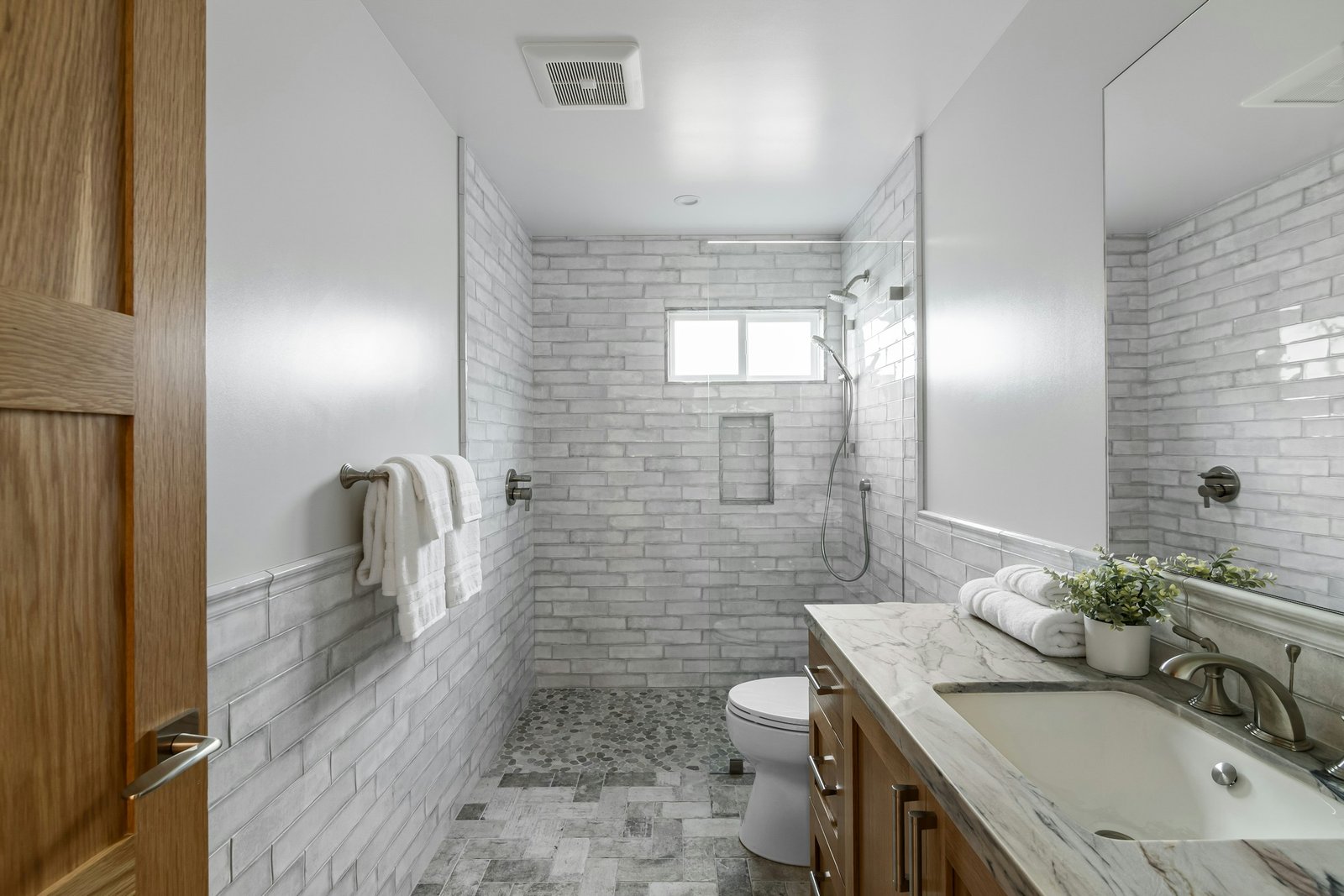
- ☐Spend on what people touch and see first: vanity, tile, lighting, faucet and shower fixtures.
- ☐Fix the unseen basics while walls are open: plumbing, ventilation and waterproofing.
- ☐Choose durable, timeless finishes over trendy ones that date quickly.
- ☐Match the quality of the rest of the house and the neighborhood, not the best bathroom you saw online.
- ☐Pull permits where required, and keep receipts, photos and warranties in one folder.
- ☐Set the scope before demolition and treat every mid-project addition as a separate decision.
That last item is the “while we’re at it” trap. When the wall is open, adding a niche, a bigger vanity or a heated floor feels cheap in the moment. Each one is small. Together they can turn an 80% project into a 50% project. If you want a starting number for your own scope, the a starting budget for your scope is a better anchor than a headline figure from another state.
When a remodel may not pay off
Sometimes the honest answer is to wait, or to do less. A few situations where the math gets harder:
- You plan to sell within months. NAR reports that the projects real estate pros most often recommend before selling are painting and, where needed, a new roof, not big bathroom overhauls. A fresh, clean bathroom may be enough.
- The scope outruns the neighborhood. Spending well above the local price level is where recoup percentages fall fastest.
- The remodel is cosmetic cover for a hidden problem. Tile over a leak is a loss at any price. Fix the cause first.
- Financing eats the margin. If a loan’s interest adds a lot to the true cost, the gap per year in the earlier table gets larger.
A fair warning
If you are remodeling mainly to sell, talk to a local real estate agent first. They can tell you what buyers in your price range expect, and that may differ from any national figure in this article.
A regional note for the Chicago area
The Cost vs. Value Report also publishes regional and city results. For the East North Central region, which includes Illinois, the midrange bath remodel in the 2025 edition showed a job cost of $24,910, an estimated resale value of $17,662 and about 70.9% recouped, a little below the national 80% (regional results). That is a regional average, not a Chicago number. For city-level figures, check the report’s Chicago page, and for neighborhood and suburb details see neighborhood and suburb options. Rules and prices differ across the area, so ask a local pro before you set a budget.
Questions to answer before you spend
- How long will I stay? The longer you stay, the less resale percentage matters and the more daily use does.
- Is the bathroom failing, dated or just not to my taste? Failing parts justify spending first.
- What do comparable homes nearby have? Aim to match, not beat, the typical finish level.
- Which features am I buying for myself, and which am I hoping a buyer will pay for? Label them honestly.
- What is my all-in number, including a contingency, and what do I do if it grows?
- Do I understand the scope in writing? Review completed bathroom projects to see how scope translates into the finished room.
If you want to see which trades and services sit behind a typical bathroom scope, the services list is a quick way to check, and there are common questions about remodeling that cover many of the same worries.

Frequently asked questions
What is a good ROI for a bathroom remodel?
Based on the 2025 Cost vs. Value Report and NAR, roughly 50 to 80 percent of cost recouped is a reasonable planning range for a typical remodel. Midrange projects tend to sit at the higher end and upscale projects at the lower end.
Does a bathroom remodel increase home value?
Usually it adds some value, but not usually the full cost. The estimates above show most of the money coming back as resale value for midrange projects, with less returning from luxury scopes. Your market and your home’s condition matter more than any national average.
Is a bathroom addition a better investment than a remodel?
In the 2025 Cost vs. Value data, a midrange bathroom addition cost $60,645 and recouped about 53%, versus about 80% for a midrange remodel that cost $26,138. A remodel usually costs less and recoups a higher share, but an addition can solve a real shortage of bathrooms, which has its own value.
Do accessible or universal design bathrooms pay off?
The Cost vs. Value universal design remodel recouped about 61% on a $42,183 average cost, lower than midrange but not far off. For many households the larger payoff is being able to stay in the home comfortably.
Should I remodel the bathroom before selling?
It depends on its condition. NAR says real estate pros most often recommend painting and a new roof before selling. If the bathroom is dated or failing, a targeted update may help, but a local agent can tell you what buyers nearby expect.
Can a cheaper remodel have a better return?
Often the percentage is better, because the cost is lower and you avoid features buyers do not value. Be careful, though, because very cheap work that fails early can erase the savings.
Final thoughts
A bathroom remodel is not a stock purchase. It is a mix of resale value, daily comfort and protection from future trouble, and only the first of those shows up in a percentage. Aim to spend where all three overlap: sound plumbing and waterproofing, durable finishes, and a layout that works. Skip the extras that you would not buy if nobody were ever going to ask about resale.
If you remember one number, remember the range, not the headline. Roughly 50 to 80 percent for a sensible remodel is a good starting assumption, and your own numbers should come from your market. Sources checked November 2026.
Want a scope and a number that fit your house?
Tell Reliable Bathroom Remodeling about your bathroom and ask for a free estimate. Bring your budget and your plans for staying or selling, and ask what is worth doing and what can wait.