
Shower Tile Ideas That Look Expensive but Aren’t
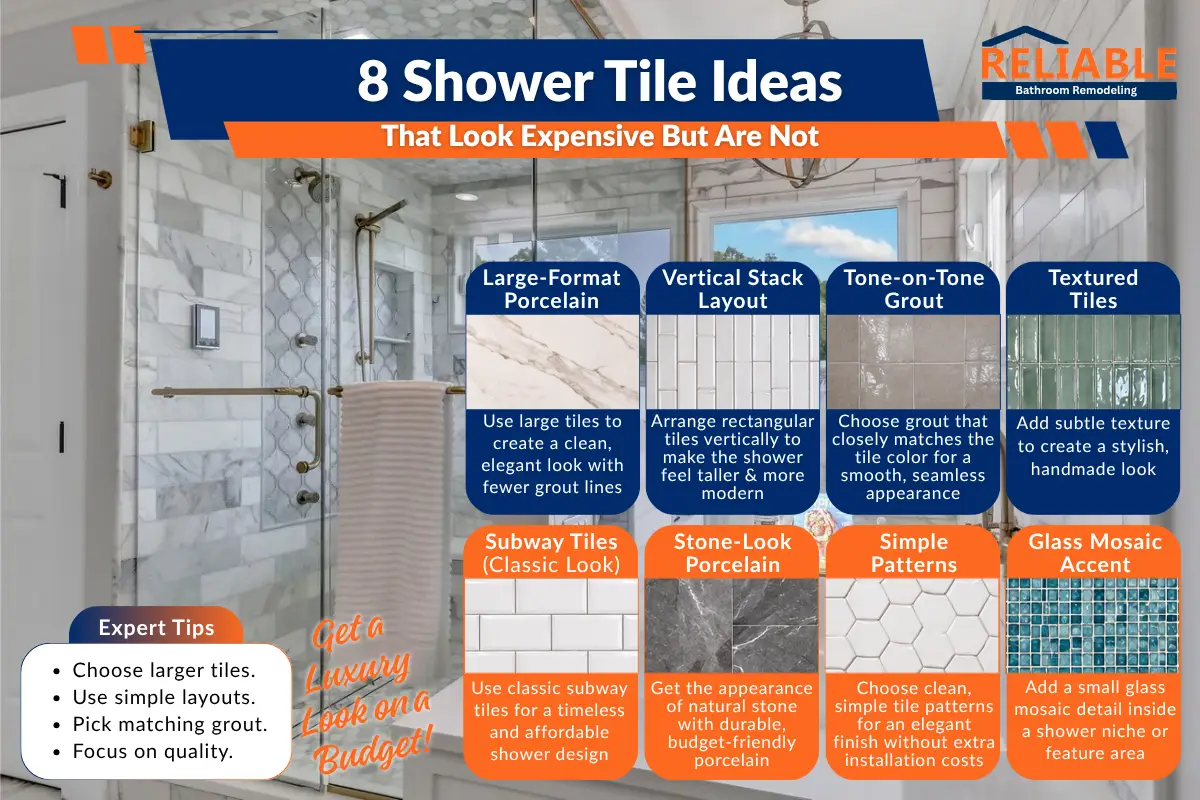
Walk into a hotel bathroom and the shower walls look like a single slab of stone. No busy grout lines, no clutter, just calm. You assume it cost a fortune. Often it did not. The look comes from a handful of decisions about tile size, pattern, grout and where you put your money, and almost all of them are available to a normal budget.
This guide walks through eight shower tile ideas that look expensive without the price tag, with real cost ranges, where each one can backfire, and the one place you should never save. Prices and sources were checked in November 2026.
Quick answer
The best budget-to-luxury moves are large-format porcelain walls with few grout lines, a simple stacked layout in place of herringbone, a tone-on-tone grout color, and one small splurge such as a glass mosaic niche. Angi puts porcelain at about $3 to $10 per square foot for the tile itself, while marble can range from $7 to $300. Kitchen Cabinet Kings says complex patterns like herringbone can double labor, so the layout you choose can matter as much as the tile.
Why some showers look expensive
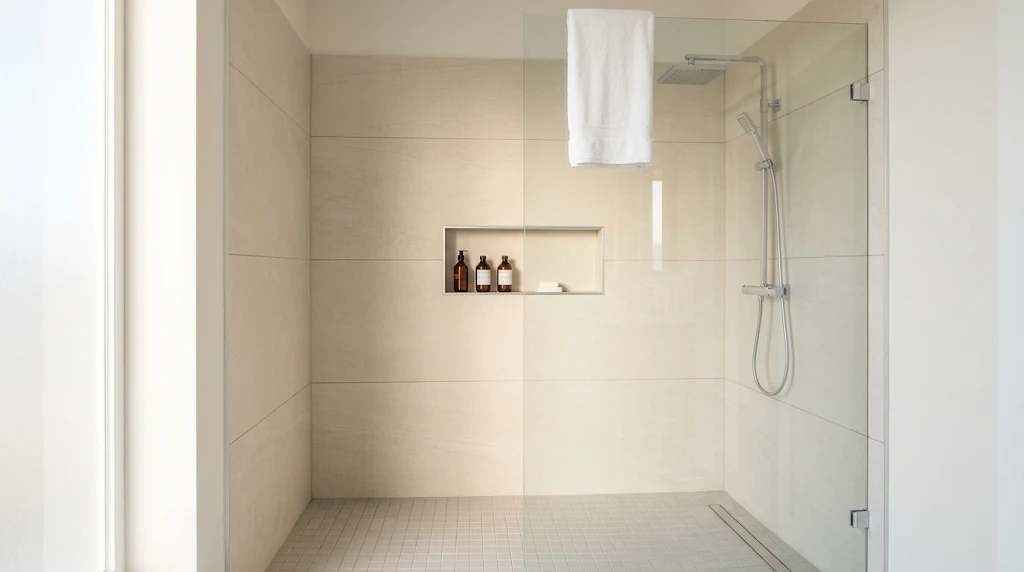
Expensive-looking showers share a few traits, and none of them is a high price tag. They look calm, not busy. The tile, grout and fixtures work together. The edges and corners look finished. And there is one focal point instead of five competing ones.
House Digest makes the same point, noting that large tiles with fewer, less obvious grout lines read as more opulent and make a room feel bigger, and that an interesting layout can lift ordinary tile at no extra material cost. Labor is the catch. Fancy layouts cost more to install, so the trick is to borrow the look without paying for the hardest part.
Eight ideas that look expensive but are not
1. Large-format porcelain with a marble or stone look
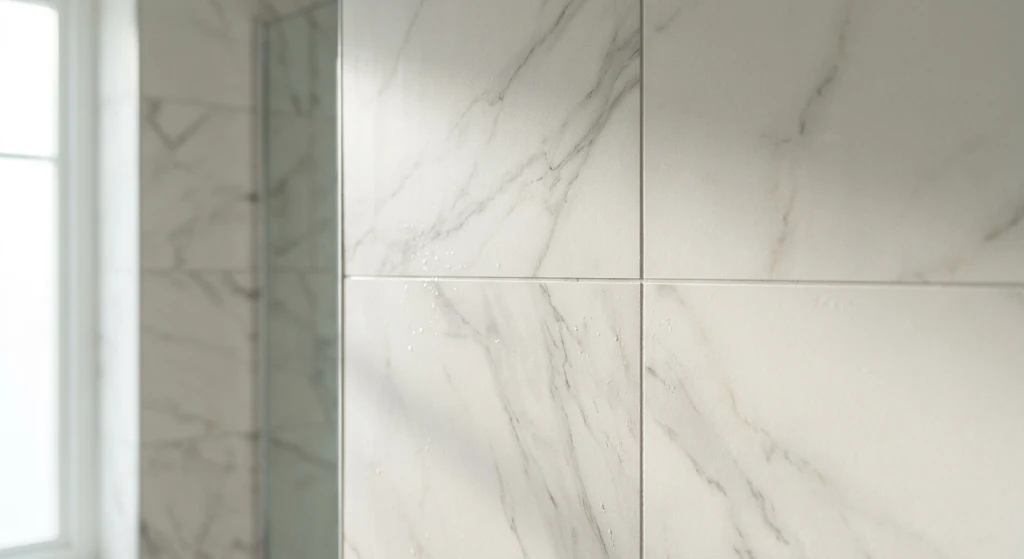
Porcelain printed to look like marble, limestone or concrete gives you the veining and the quiet palette of stone without the upkeep. Angi says porcelain has a water absorption rate under 1 percent, is very durable, and typically costs about $3 to $10 per square foot, while natural marble ranges from $7 to $300 and needs regular sealing, in some cases about every six months if the shower is used and cleaned often. Large sheets also mean fewer joints, which is where much of the quiet luxury comes from.
The catch is labor and prep. Large tiles need a flat wall and more care in setting, and an installer may charge more per square foot than for small tile. One tile-cost guide puts installed large-format porcelain at about $12 to $30 per square foot, including substrate correction. Installers also often use rectified tile, which has precisely cut edges, for large-format work. The same guide puts it at about $0.50 to $2.00 more per square foot.
2. Vertical stack instead of herringbone
Turn a plain rectangular tile on its end and stack the joints in straight lines. A vertical stack makes ceilings feel taller and looks custom. According to Angi, patterns that are more complicated are harder to install and can raise costs, and Kitchen Cabinet Kings says herringbone or pinwheel layouts can double the labor cost of subway tile. A straight stack takes about the same time as a basic grid, so you get the design effect without the extra hours.
3. Tone-on-tone grout
Choose grout very close to the tile color. The grid fades, the wall reads as one surface, and the shower looks larger and cleaner. This is a design choice that costs nothing, though a color-matched grout can show stains differently, so sample it first. If you want a contrast grout, pick a color that is a few shades off, not stark white against dark tile.
4. Textured or fluted ceramic that mimics handmade tile
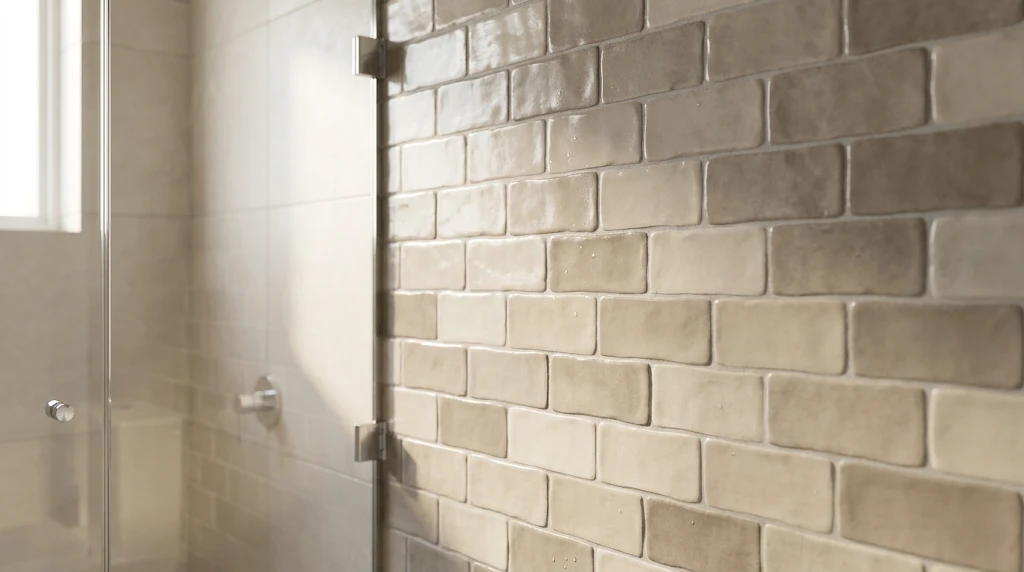
Handmade-style tile with a soft, uneven glaze has a high-end, artisan look. Kitchen Cabinet Kings notes that handmade ceramic tile can reach $100 or more per square foot, while most ordinary ceramic tile runs under $5 per square foot. Machine-made ceramic with a variegated glaze or a subtle ripple gives much of the same feel for far less, and my read is that on an accent wall it can pass for the real thing at arm’s length. Always view a physical sample in your own light.
5. One small splurge: a glass or stone mosaic niche
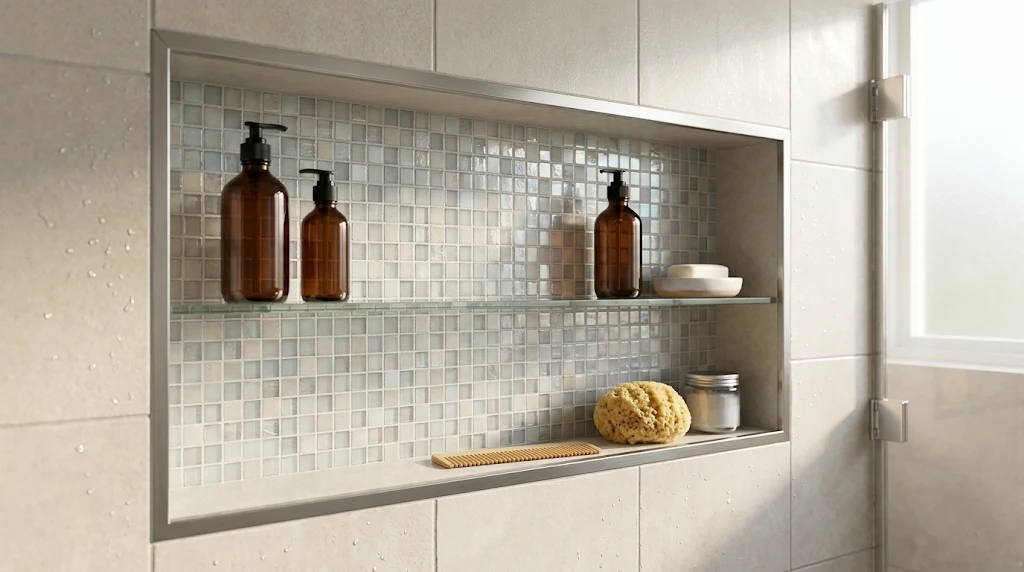
Instead of premium tile on every wall, put a little luxury where the eye lands. Angi lists glass mosaic at about $5 to $15 per square foot and pebble tile at $30 to $40. A typical niche back is only a few square feet, so even a premium mosaic adds little to the bill. As an illustration using my own arithmetic, a 6 square foot niche backing at $40 per square foot is about $240, compared with about $18 to $60 for the same area in porcelain at $3 to $10 per square foot.
6. Continue the same tile from floor to wall
Running one tile across the bathroom floor and up the shower wall removes visual breaks and makes small rooms feel larger. If the floor and the shower are different levels or you want a slip-resistant surface, you can switch to a small-format version of the same tile on the shower floor. Angi warns that larger tiles with fewer grout lines can be slippery on a shower floor, so a mosaic in the same color is a safer pairing. See also the heated floor option under tile if you like the idea of warm tile underfoot.
7. Run the tile higher than you need
Tiling to the ceiling instead of stopping at a standard height gives a built-in feel. Going from 7 feet to an 8 foot ceiling adds about 14 percent more wall area, which is my own arithmetic, so the cost rises by roughly the same percentage for tile and labor on those walls. For many people that is a small price for a big visual upgrade, but price it as a separate line so you can decide.
8. Clean edges and corners
Cheap tile with great finishing beats expensive tile with sloppy edges. Metal edge trims instead of bullnose pieces, even grout lines, neat corner joints and a straight niche can give a basic tile a hotel-level finish. These details are mostly labor and planning, not materials. Ask your installer how they plan to finish the edges and corners.
What it costs: real numbers
Tile prices run from pocket change to a small fortune, and sources use different definitions, so ranges overlap. This table combines Angi for tile material prices, Kitchen Cabinet Kings for labor, and This Old House for installed ranges. Treat it as a starting point and get local quotes.
| Tile or choice | Material price per sq ft | Notes |
|---|---|---|
| Ceramic | $0.50 to $15 | Angi. Most tile under $5. Handmade ceramic can exceed $100 (Kitchen Cabinet Kings). |
| Porcelain | $3 to $10 | Angi. Under 1% absorption, durable. |
| Glass mosaic | $5 to $15 | Angi. Easy to clean, good for small accents. |
| Marble | $7 to $300 | Angi. Wide range, needs regular sealing. |
| Pebble | $30 to $40 | Angi. Slip-resistant but harder to clean. |
| Installed ceramic or porcelain walls | $12 to $30 | This Old House installed range. |
| Installed natural stone | $20 to $50 | This Old House installed range. |
Labor is the swing factor. Kitchen Cabinet Kings puts typical shower tile labor at about $7 to $20 or more per square foot, with patterns like herringbone or pinwheel potentially doubling the labor cost compared with subway. A quick illustration using my own arithmetic: on 77 square feet of wall at $7 to $20 per square foot, a standard layout costs about $540 to $1,540 in labor. If a herringbone pattern doubles that, the pattern alone adds roughly $540 to $1,540. That is the same money you could spend on the tile itself.
Where saving backfires
- Waterproofing and prep. A beautiful wall over a poorly waterproofed shower is an expensive mistake. Manufacturers such as Schluter specify wait times for their membranes before tiling and water testing. Never skip or rush that step to save a day.
- A flat wall for large tile. Large panels show every bump. Budget for the substrate work, or the finish will look worse than small tile would have.
- Cheap trim and caulk. Corners and the tub joint need flexible sealant, not rigid grout. A bad corner undermines the whole wall.
- Slippery shower floors. Pick a small-format or textured tile for the floor, even if the walls are large.
- Too many ideas at once. If every wall has a different pattern, nothing looks expensive. Choose one hero surface and keep the rest quiet.
The “while we’re at it” trap shows up here too. Once you love one accent, it is tempting to add a second pattern, a bench in a third tile and a border. Each addition costs materials and hours. Decide your focal point first and let everything else support it. If you want to see how finished layouts look, browse completed shower layouts.
How to pick your look
- ☐Pick one hero surface, such as the back wall or the niche, and keep the rest simple.
- ☐Choose porcelain for walls and floors unless you want to maintain natural stone.
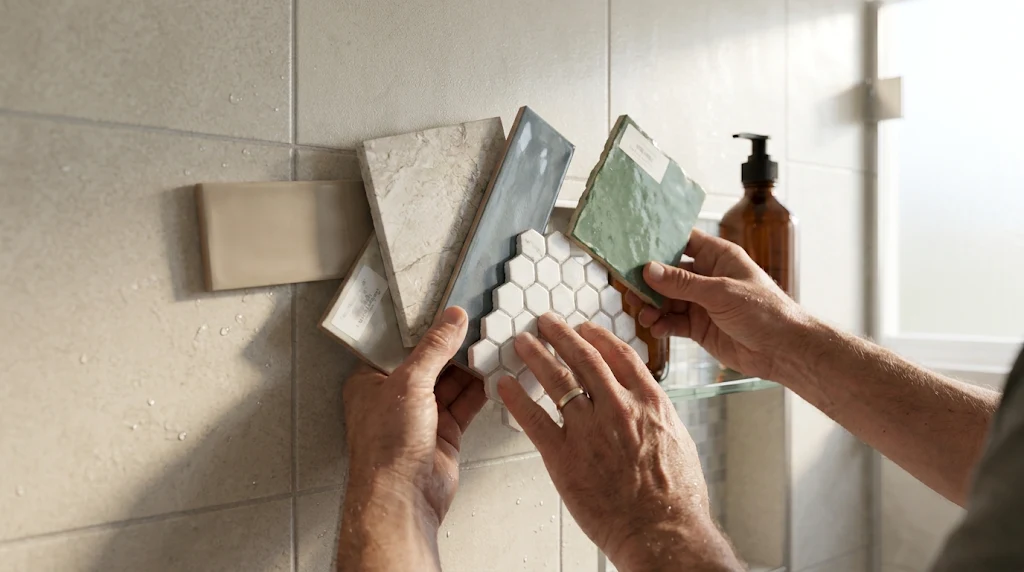
- ☐Order samples and look at them in your own bathroom light, wet and dry.
- ☐Match or tone the grout to the tile, then test a small patch.
- ☐Pair large-format wall tile with a small mosaic or textured tile on the floor.
- ☐Ask your installer for a separate price for pattern complexity, so you can compare layouts.
- ☐Set aside the money for waterproofing and trim before you spend on tile.
For a baseline budget, see baseline price ranges. If you are also thinking about a step-free design, the zero-curb shower styles change how the floor tile is laid, and the shower tile and installation services page shows which trades are involved. Questions about maintenance? Check the tile and shower FAQs.
Frequently asked questions
What is the cheapest shower tile that still looks good?
Standard porcelain or ceramic in a simple layout. Angi puts porcelain at about $3 to $10 per square foot and most ceramic under $5. A straight stack or offset layout keeps labor down, and tone-on-tone grout makes basic tile look more refined.
Does large-format tile cost more to install?
Often a little. It needs a flatter wall and more care, so labor and prep can be higher per square foot. One guide puts installed large-format porcelain at about $12 to $30 per square foot, including any substrate correction.
Is herringbone worth the extra cost?
If you love it, yes, but price it separately. Kitchen Cabinet Kings says herringbone or pinwheel patterns can double labor compared with subway tile. A vertical stack gives a custom look for much less.
Is marble-look porcelain as good as real marble?
For a shower, it is usually the more practical choice. Porcelain has very low water absorption and does not need the regular sealing that marble does, though real marble has a depth that printed tile only approximates.
What tile should I use on a shower floor?
A small-format or textured tile, such as a mosaic, because the extra grout lines add traction. Angi warns that large tiles with fewer grout lines can be slippery on shower floors.
Where should I not cut costs in a tiled shower?
Waterproofing, substrate prep, trim and corner sealant. Those are the hidden parts that decide whether the shower lasts. This is general information, and your installer should follow the manufacturer instructions for your products.
Final thoughts
A shower looks expensive when it looks calm, consistent and carefully finished. That is mostly a matter of choices: fewer grout lines, a simple layout, matching grout, one small splurge and clean edges. The tile price matters less than people think, and the pattern and the prep matter more.
If you remember one thing, make it this: spend on the parts nobody sees, and be selective about the parts everybody does. Pick one hero, keep the rest quiet, and ask for the pattern cost as its own line. If you want to check availability before reaching out, see the service locations list. Sources checked November 2026.
Want a shower that looks high-end without the high-end bill?
Tell Reliable Bathroom Remodeling about your shower and ask for a free estimate. Bring your tile samples and ask for layout options priced side by side.