
Tile vs. Acrylic vs. Solid-Surface Shower Walls: Cost and Maintenance
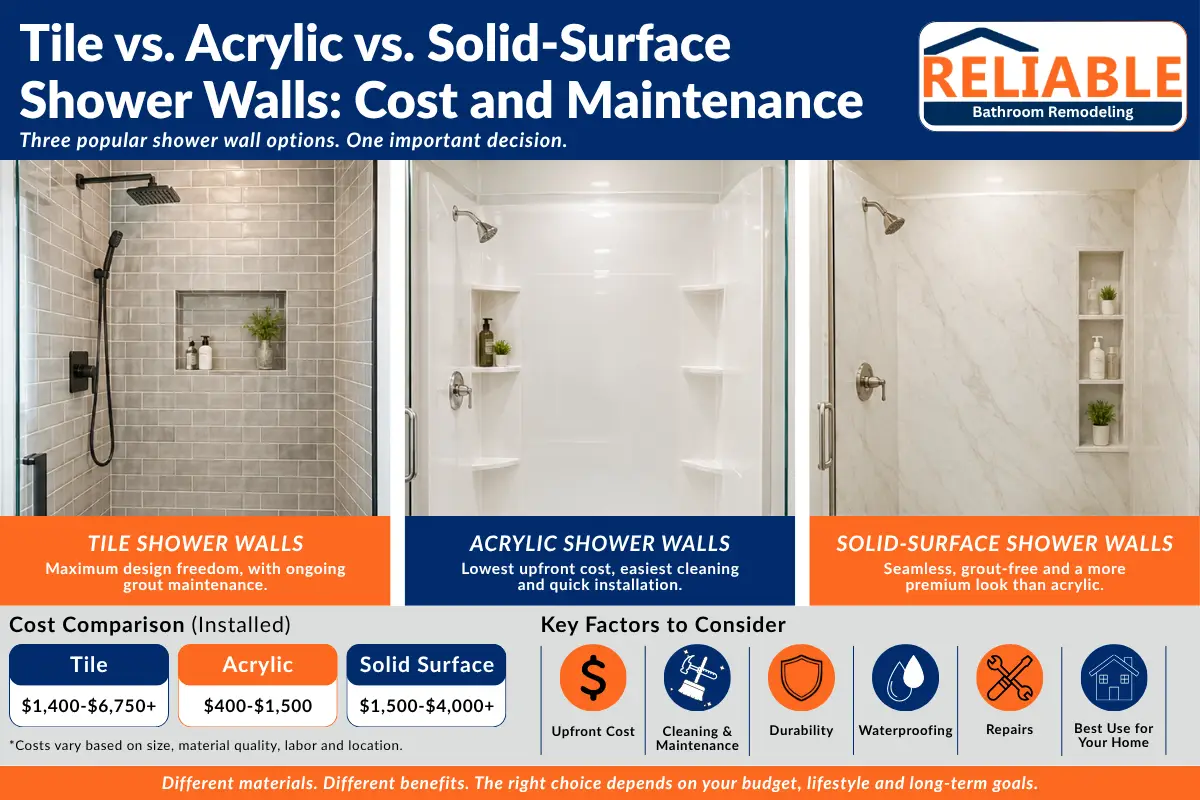
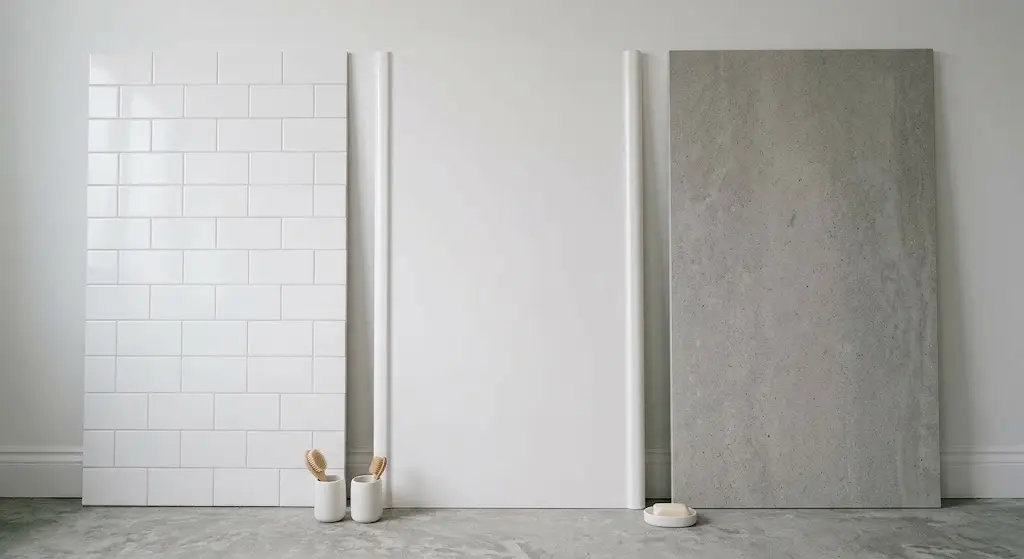
Picture a showroom with three sample boards leaning against the wall. One is glossy ceramic tile with a crisp grout line. One is a smooth acrylic panel that looks suspiciously like tile. The third is a thick, matte slab the salesperson calls “solid surface.” Each one costs a different amount, cleans a different way, and will behave very differently in ten years. Choosing between them by color alone is how people end up scrubbing grout on a Saturday morning.
This guide compares the three most common shower wall options on the things that actually shape your experience: what they cost installed, how long the job takes, what upkeep looks like, how long they tend to last, and how buyers see them. Prices and sources were checked in November 2026. A few of the sources sell one of these materials, so I flag that where it matters.
Quick answer
For a standard three-wall shower, tile usually lands around $1,700 to $3,800 for walls with waterproofing (my estimate from This Old House pricing), while professionally installed panels run roughly $800 to $5,500 depending on material, according to Block Renovation. Acrylic panels sit near the low end, and solid surface and stone-look panels sit higher. Panels install in about 1 to 2 days versus 3 to 7 days for tile and need less cleaning. Tile gives you the most design freedom. None of them is maintenance-free.
The three options in plain terms
- Tile. Individual ceramic, porcelain or stone pieces set in mortar over a waterproofed wall and sealed with grout. It is the default choice and the most flexible for design.
- Acrylic. Large factory-made sheets, usually sized to fit an alcove or surround. They are non-porous, lightweight, and can come with molded tile patterns or stone looks.
- Solid surface. Thicker engineered panels, for example products in the Corian and Swanstone family, with color running through the material. They are heavier, often custom-cut, and installed by pros.
A warning about words. “Solid surface” does not mean the same thing to everyone. Block Renovation uses it for engineered resin panels. ZINTEX, an acrylic shower installer, uses it to include natural stone such as marble, quartz and granite, which it notes is porous and needs resealing. Those are very different materials with different upkeep. When a quote says solid surface, ask exactly what product it is and ask to see the care instructions.
There are other panel types too, including PVC, laminate, glass and stone veneer, and I touch on them in the cost section. But the tile, acrylic and solid-surface trio covers most real decisions.
What each option costs
Costs depend on size, finish and your area, so treat everything here as a national estimate, not a quote. To keep the comparison fair, I used the walls of a common 60 by 36 inch alcove shower: three walls tiled or paneled to 7 feet, which is about 77 square feet. For tile I used installed prices from This Old House: $12 to $30 per square foot for ceramic or porcelain and $20 to $50 for natural stone, plus $800 to $1,500 for backer board and a waterproofing system. For panels I added the material and labor ranges published by Block Renovation: materials priced per standard surround, and $500 to $1,500 for professional installation.
| Wall material | Estimated installed cost, three walls | Notes |
|---|---|---|
| Ceramic or porcelain tile | $1,724 to $3,810 | 77 sq ft at $12 to $30, plus waterproofing and backer board. |
| Natural stone tile | $2,340 to $5,350 | 77 sq ft at $20 to $50, plus waterproofing and backer board. Needs sealing. |
| PVC panels | $650 to $2,100 | Lowest cost, but can warp or discolor with heat over time. |
| Acrylic panels | $900 to $2,400 | Materials about $400 to $900 plus installation. |
| Laminate panels | $1,000 to $2,700 | Seams must be sealed to keep water out. |
| Solid surface panels | $1,200 to $3,500 | Heavier, pro installation, often custom-cut. |
| Glass panels | $1,500 to $4,500 or more | Custom fabrication and pro installation. |
| Stone veneer panels | $2,000 to $5,500 or more | Heavy and costly, may need sealing. |
These totals come from my own arithmetic using the published ranges above. They leave out demolition, plumbing, the shower pan, glass door and fixtures, and they assume a standard-size shower. Block Renovation’s own installed range for a standard three-wall panel system is about $800 to $5,500, which matches the spread in the table.
Whole-shower price tags are higher and more varied
If you search around, you will see bigger numbers, because many sites price the entire shower, not just the walls. ZINTEX lists whole-shower installed ranges of $11,000 to $24,000 for acrylic, $10,000 to $30,000 for tile and $15,000 to $40,000 for solid surface. That company installs acrylic, so weigh the comparison accordingly. The point to take away is that the wall material is one line on a larger bill, so for the bigger picture, see budget guidance for your project.
Install time and disruption
This is where panels have a clear edge. Large panels replace hundreds of small pieces, so there is less cutting, less mess and fewer steps. ZINTEX lists install time at about 1 to 2 days for acrylic and solid surface and 3 to 7 days for tile, and tile setting also appears at 3 to 7 days in USA Cabinet Store’s stage breakdown of a full bathroom remodel.
- Tile: walls need backer board, a waterproofing layer, a flood-test wait where required, then tile, then grout. Each layer has to cure before the next one.
- Acrylic and solid surface: panels are fitted, glued or fastened, and sealed at the edges. The work is quicker, but the panels are often made to order. Block Renovation notes that custom solid surface lead times run longer, since nothing is made until the opening is measured.
- Lead time: ZINTEX says standard lead times in the shower remodeling industry start around six weeks from consultation to installation. Faster is possible, but plan on weeks, not days, for custom material.
Remember that install time is only the on-site part. If you want the bigger schedule picture, the pattern is the same one every remodel follows: design and ordering take longer than the crew work. Browsing tile and panel shower examples can help you decide before you order.
Maintenance, honestly
Everyone promises low maintenance. Here is what the work looks like in practice, based on the sources above and ordinary bathroom practice.
| Task | Tile | Acrylic panels | Solid surface |
|---|---|---|---|
| Everyday cleaning | Easy on tile faces, slower along grout lines | Wipe with mild soap and water | Wipe down; use cleaners safe for the material |
| Grout | Needs periodic cleaning and sealing | None | None |
| Caulk and seams | Corners and edges still need recaulking over time | Seams and edges need checking and resealing as needed | Seams need checking; custom fits have fewer |
| Damage risk | A cracked tile can be replaced alone | Abrasive cleaners can scratch or dull it | Wrong cleaners can harm porous natural stone |
| Repair | Replace a tile, redo grout | Minor scratches can sometimes be buffed; cracks may mean a panel replacement | Minor marks can sometimes be sanded or buffed on some products |
Two ideas are worth holding on to. First, panels remove grout, and grout is the main thing that collects soap scum and mold on a tile wall. ZINTEX says tile needs frequent resealing and describes the grout as the weak point for water and mold. Block Renovation also says panels are easier to clean and less prone to grout-related issues. Second, fewer seams does not mean zero seams. Corners, edges and anywhere the wall meets the pan or the valve still need good caulk and a watertight installation.
Cleaning tip that applies to all three
Use the gentlest cleaner that works. Abrasive pads and harsh chemicals can scratch acrylic and laminate, and the wrong product can dull or damage natural stone. Check the manufacturer’s care sheet before you buy a cleaner.

How long each one lasts
Published lifespans are estimates, not guarantees, and the sources come from sellers. ZINTEX gives about 15 to 20 years for both acrylic and tile and 15 to 30 years for solid surface. Another ZINTEX page puts tile at 10 to 25 years, which shows how loose these ranges are. Block Renovation says high-quality panels, especially solid surface or stone veneer, can last as long as tile when installed and maintained properly.
My read is that the installation matters more than the material. A well-waterproofed tile shower can outlast a poorly installed panel, and the reverse is also true. A leak behind the wall, whatever is on the front, is what shortens the life of a shower. That is why it is worth asking how the wall behind the finish will be waterproofed, no matter which option you choose.
Looks and resale appeal
Tile offers the widest choice of colors, textures and patterns. Panels offer fewer layouts, though good ones can mimic tile, stone and even wood. ZINTEX says higher-end acrylic can imitate tile with simulated grout lines, and Block Renovation says panels can create a seamless modern look that makes small bathrooms feel more open.
Resale is less clear. Block Renovation notes that in some markets tile is still seen as the premium finish, and basic panel systems may signal a budget remodel to some buyers. Premium panels soften that effect. Nobody has a clean number for it, so a local real estate agent is the best source. If you expect to sell within a few years, ask what buyers in your price range expect to see. If you plan to stay, comfort and upkeep probably matter more.
Myths and facts
| Myth | Fact |
|---|---|
| “Acrylic is just cheap plastic.” | It ranges from basic to premium. Block Renovation lists acrylic surrounds at about $400 to $900 in materials, above PVC, and quality affects durability and look. |
| “Tile is always the premium choice.” | In some markets it is. But premium panels and stone-look systems can match or exceed mid-range tile in cost and appeal. |
| “No grout means no maintenance.” | Seams, corners and caulk still need attention, and some panels need sealing at the joints. |
| “Solid surface is one specific product.” | The term covers different materials across sources. Ask for the product name and care instructions. |
How to choose
Start with what you are least willing to live with. Some people cannot stand scrubbing grout. Others cannot stand a plain wall. Matching the material to your tolerance is worth more than any chart.
- ☐I want the widest design choice and do not mind periodic grout care: tile.
- ☐I want the fastest install and the easiest wipe-down: acrylic or solid surface panels.
- ☐I want a seamless premium look and will pay more for it: solid surface or stone-look panels with a pro install.
- ☐I am on the tightest budget and the shower will see light use: basic panels, with eyes open about durability.
- ☐I plan to sell soon: ask a local agent what buyers expect before you decide.
There is also the “while we’re at it” trap. Once you choose a premium panel, it is tempting to add a bench, a niche and a second showerhead to match. Each addition is its own cost and lead time, so decide the extras before ordering. If you are weighing a bigger redesign, such as walk-in shower upgrades, settle the layout first and the wall material second.
For other questions that come up at this stage, the remodeling FAQ answers may help, and the shower and bath services overview lists which trades are involved.
Frequently asked questions
Is tile or acrylic cheaper for shower walls?
Acrylic panels usually cost less installed, about $900 to $2,400 for a standard three-wall surround by my estimate, versus roughly $1,700 to $3,800 for tile walls with waterproofing. Premium tile and stone can run well above that, so compare the specific product.
Which shower wall is easiest to clean?
Smooth, non-porous panels such as acrylic and many solid-surface products are easiest, because there is no grout to scrub. Tile can stay clean too, but grout lines take extra work.
Does solid surface cost more than tile?
Often it costs about the same or more, depending on the product. Block Renovation’s materials range for solid surface panels is about $700 to $2,000, and whole-shower prices from ZINTEX list it above both acrylic and tile.
Can I put panels over existing tile?
Block Renovation says it is often possible if the tile is in good shape and the surface is prepared, but follow the manufacturer’s directions. Have the wall checked for hidden moisture first, since covering a problem does not fix it.
Are shower wall panels really waterproof?
The panel material itself is, but a shower is a system. Seams, corners, the base and the plumbing penetrations are where water gets in, so the quality of the installation matters as much as the material.
Do panels hurt resale value?
Sometimes. Block Renovation says tile is still read as premium in some markets, while well-chosen, well-installed panels are increasingly accepted. A local agent can tell you what buyers nearby expect.
Final thoughts
Tile gives you freedom, panels give you speed and easier cleaning, and solid surface sits between with a higher price for a seamless look. None is automatically best. The best option is the one you will still be happy to look at and clean in ten years, installed over a wall that is properly waterproofed.
If you remember one thing, ask each contractor to price the wall material and the waterproofing as separate lines. That one step makes the quotes comparable and shows you where the money goes. If you are comparing contractors by location, you can check the areas served before you reach out. Sources checked November 2026.
Not sure which wall material fits your bathroom?
Tell Reliable Bathroom Remodeling about your shower and ask for a free estimate. Bring your budget and your cleaning tolerance, and ask for tile and panel options priced side by side.